

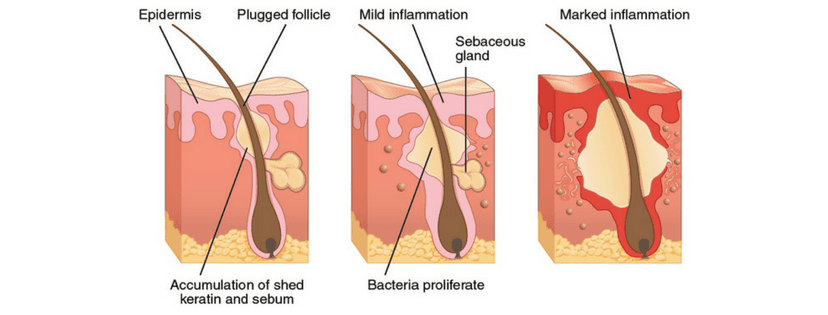
Benzoyl peroxide plays a central role in acne treatment by targeting the bacterial component of acne development, particularly the overgrowth of Cutibacterium acnes within the pore. This bacterium thrives in the low-oxygen, oil-rich environment created when a pore becomes clogged with sebum and dead skin cells. Benzoyl peroxide works by breaking down on the skin to release oxygen, creating conditions that are unfavorable for these bacteria, which are anaerobic and do not survive well in oxygen-rich environments. This antibacterial action helps reduce the bacterial load within the follicle and may limit the progression of acne lesions.
The presence of Cutibacterium acnes alone does not always lead to acne, but when combined with excess sebum production and follicular blockage, it can contribute to inflammation. As the bacteria proliferate, they can trigger an immune response, leading to redness, swelling, and the formation of inflamed pimples. By reducing bacterial activity inside the pore, benzoyl peroxide helps interrupt this cycle and may decrease the severity of inflammatory acne.
In addition to its antibacterial effects, benzoyl peroxide has mild keratolytic properties, meaning it can help loosen the buildup of dead skin cells that contribute to clogged pores. This supports improved pore clarity and complements its primary function of controlling bacteria. However, it does not directly regulate oil production, so it is often used alongside other ingredients that address sebum and cell turnover, such as retinoids or salicylic acid.
Benzoyl peroxide is available in a range of concentrations and formulations, including cleansers, gels, and leave-on treatments. Lower concentrations are often sufficient for many individuals and may be better tolerated, while higher strengths are sometimes used for more persistent acne under guidance. It is commonly introduced gradually to reduce the risk of irritation, as dryness, peeling, and sensitivity can occur, especially during the early stages of use.
One notable characteristic of benzoyl peroxide is that bacteria do not develop resistance to it, unlike some topical antibiotics. This makes it a valuable long-term option in acne management and a frequent component in combination therapies. When used with topical or oral antibiotics, it may help reduce the risk of antibiotic resistance by limiting bacterial survival through a different mechanism.
Despite its effectiveness, careful use is important to maintain skin balance. Overuse or combining it with multiple strong actives can compromise the skin barrier, potentially leading to increased irritation and discomfort. Consistent but moderate application, along with supportive skincare such as moisturizers and daily sunscreen, is typically recommended.
Understanding the role of benzoyl peroxide highlights why it remains a widely used and evidence-supported ingredient in acne care. By reducing bacterial activity within the pore and helping control inflammation, it contributes to a more stable skin environment and supports the management of inflammatory acne over time.
