

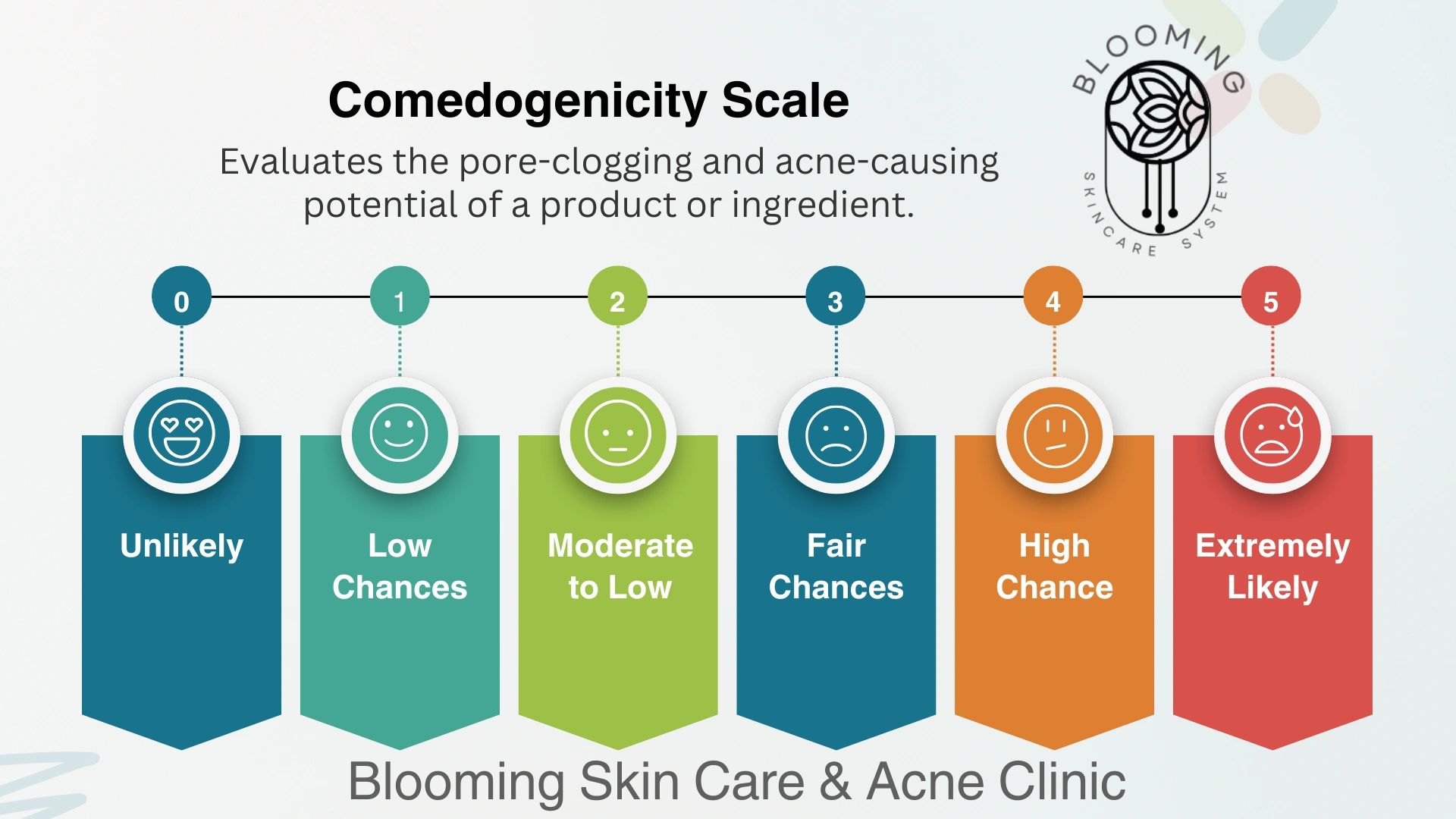

Non-comedogenic skincare products are formulated to reduce the likelihood of clogging pores, which is a central factor in the development of acne. The term “comedogenic” refers to a substance’s potential to contribute to comedone formation, including blackheads and whiteheads. Inside the pore, acne begins when excess sebum combines with dead skin cells and forms a blockage. Products that are highly occlusive or poorly suited to a person’s skin type may increase the risk of this buildup by trapping oil and debris within the follicle. Non-comedogenic formulations are designed to minimize this risk by using ingredients and textures that are less likely to interfere with normal pore function.
The science behind non-comedogenic products is based on how different ingredients interact with the skin’s oil and keratinization processes. Some ingredients have historically been associated with a higher likelihood of clogging pores, particularly when used in certain concentrations or formulations. However, comedogenicity is not solely determined by individual ingredients in isolation. The overall formulation, including how ingredients are combined, their concentration, and how they are delivered to the skin, plays a significant role. This is why an ingredient that may be considered comedogenic in one context could be well tolerated in another.
Skin type and individual variability also influence how products behave on the skin. For example, individuals with oily or acne-prone skin may be more sensitive to heavier formulations, while those with drier skin may tolerate richer products without experiencing breakouts. Hormonal activity, environmental conditions, and existing skincare routines can further affect how pores respond to different products. As a result, “non-comedogenic” is not an absolute guarantee that a product will not cause breakouts, but rather an indication that it has been designed to lower that risk.
Testing methods for comedogenicity have evolved over time, though they are not without limitations. Early testing often involved applying ingredients to animal models or specific areas of human skin, which may not fully represent how products behave under real-world conditions. Modern formulations tend to focus on creating lightweight, balanced products that support the skin barrier while avoiding excessive occlusion. This includes the use of ingredients that help maintain hydration without trapping oil, as well as emulsifiers and delivery systems that allow products to absorb more evenly.
Non-comedogenic products are often recommended as part of acne management strategies because they support a clearer pore environment while allowing other treatments to function effectively. For example, using a non-comedogenic moisturizer can help maintain hydration without contributing to congestion, which is important when using potentially drying acne treatments such as retinoids or benzoyl peroxide. Similarly, non-comedogenic sunscreens are important for protecting the skin without increasing the risk of breakouts.
Despite their benefits, non-comedogenic products should be selected thoughtfully and introduced gradually. Even well-formulated products can cause irritation or breakouts if they are not compatible with an individual’s skin or if too many new products are introduced at once. Monitoring how the skin responds over time is essential for identifying what works best.
Understanding the science of non-comedogenic skincare highlights the importance of formulation, skin compatibility, and balance. Rather than relying solely on labels, a broader approach that considers ingredient behavior, skin type, and overall routine is more effective for maintaining clear pores and supporting long-term skin health.
