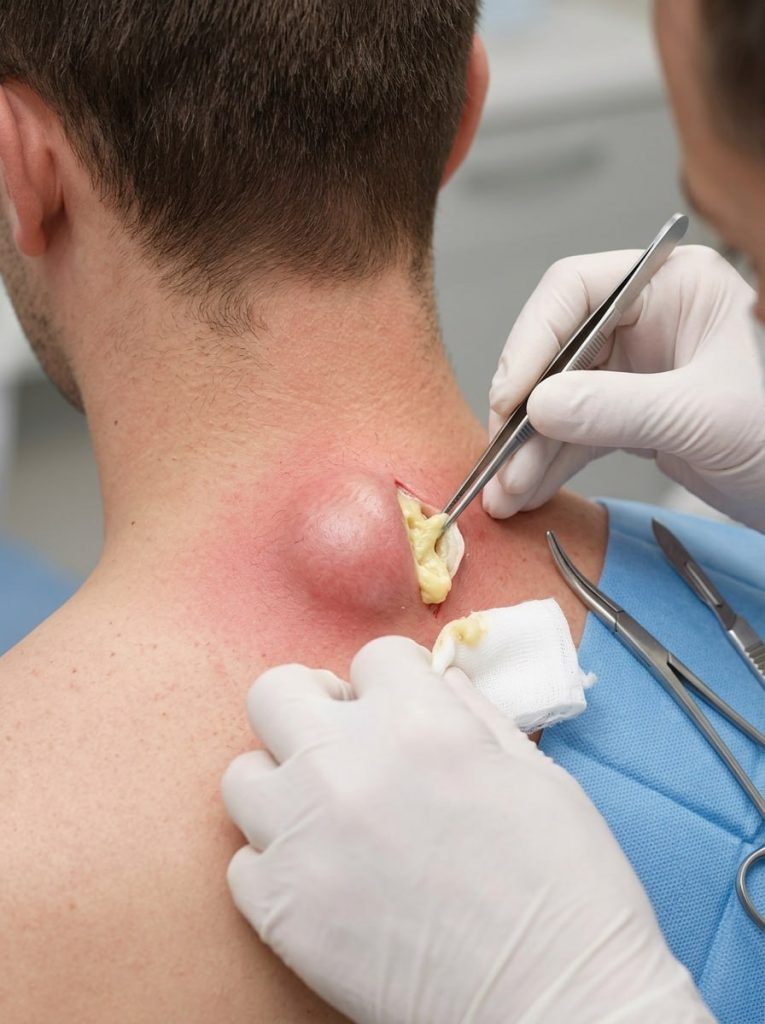
Acne scars form when deep inflammation damages the skin beyond the surface, affecting the supporting structures in the dermis. Whether a scar develops depends on the severity of the inflammation, how the skin heals, and individual factors such as genetics.
Here’s the process:
- A deep acne lesion develops. Conditions such as cysts or nodules extend into the dermis rather than remaining in the outer layer of the skin. The inflammatory response is stronger and lasts longer than with a superficial pimple.
- Inflammation damages surrounding tissue. Immune cells release enzymes and signaling molecules to fight bacteria and clear damaged tissue. During this process, healthy structures—including collagen and elastin fibers that provide the skin with strength and elasticity—can also be damaged.
- The skin begins repairing itself. Specialized cells called fibroblasts produce new collagen to replace what was lost. The balance between tissue breakdown and new collagen production determines how the healed skin will look.
- A scar forms if repair is imperfect.
- Too little collagen is produced → the skin heals with a depression, creating atrophic scars. These include:
- ice pick scars: narrow, deep pits.
- boxcar scars: round or oval depressions with defined edges.
- rolling scars: broad, shallow depressions with sloping edges.
- Too much collagen is produced → the skin heals with a raised scar. These include:
- hypertrophic scars: remain within the boundaries of the original lesion.
- keloids: grow beyond the original injury and are more likely in people with a genetic predisposition.
- Too little collagen is produced → the skin heals with a depression, creating atrophic scars. These include:
Deep inflammation also increases the risk of changes in skin color after acne heals. These are not true scars:
- Post-inflammatory hyperpigmentation causes dark spots.
- Post-inflammatory erythema causes lingering pink or red marks.
Reducing inflammation early—by treating acne promptly and avoiding picking or squeezing lesions—can lower the risk of permanent scarring. Once scars have formed, treatments such as topical retinoids (for ongoing acne), microneedling, laser resurfacing, chemical peels, subcision, dermal fillers, or surgery may improve their appearance, depending on the scar type. A dermatologist can help determine which approach is most appropriate.
