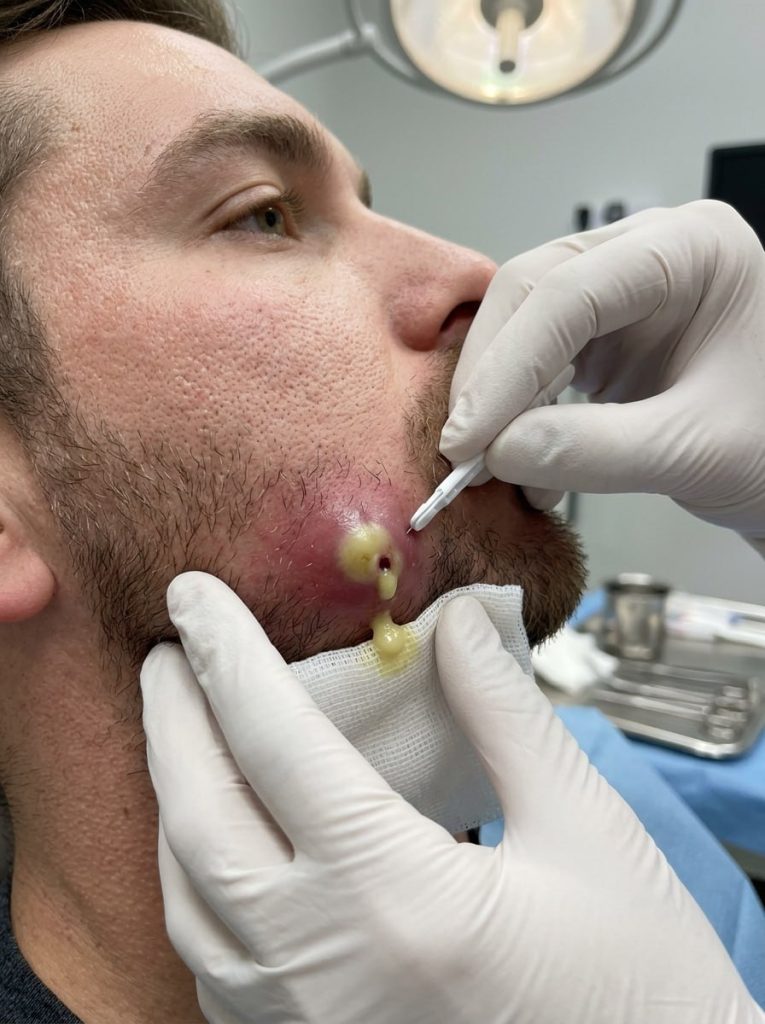
Dermatologists evaluate acne severity by looking at the type of acne lesions, how many are present, where they are located, how extensive they are, and whether they have already caused scarring or pigment changes. This assessment helps guide treatment and estimate the risk of long-term skin damage.
1. Type of acne lesions
Different lesions indicate different levels of severity:
- Non-inflammatory lesions
- Comedonal acne includes:
- Open comedones (blackheads)
- Closed comedones (whiteheads)
- These are generally considered mild.
- Comedonal acne includes:
- Inflammatory lesions
- Papules (small, red bumps)
- Pustules (pus-filled bumps)
- acne nodules
- acne cysts
- Nodules and cysts indicate deeper inflammation and a higher risk of scarring.
2. Number of lesions
Dermatologists estimate the total number of lesions and their distribution. While there is no single universal cutoff, acne is often described as:
- Mild: Mostly comedones with a few papules or pustules.
- Moderate: More numerous inflammatory lesions with a mix of comedones.
- Severe: Many inflammatory lesions, extensive nodules or cysts, or widespread involvement.
3. Distribution on the body
The location of acne is also important. Common areas include:
- Face
- Chest
- Back
- Shoulders
Acne affecting multiple body regions or covering large areas may be considered more severe because it reflects more extensive disease.
4. Signs of scarring
Dermatologists carefully look for existing scars, since these indicate previous deep inflammation and influence treatment decisions. They assess for:
- ice pick scars
- boxcar scars
- rolling scars
- hypertrophic scars
- keloids
Even if the current acne appears only moderately active, the presence of scarring may justify more aggressive treatment to prevent additional permanent damage.
5. Pigment changes
They also assess for lingering marks after acne heals, including:
- Post-inflammatory hyperpigmentation
- Post-inflammatory erythema
Although these are not true scars, they can have a significant cosmetic impact and may influence treatment choices.
6. Symptoms and history
A dermatologist will ask about factors such as:
- How long the acne has been present.
- Whether lesions are painful or tender.
- How often flare-ups occur.
- Previous treatments and how well they worked.
- Whether acne is leaving scars or dark marks.
- Family history of severe acne or scarring.
- For appropriate patients, whether acne flares with hormonal changes or medications.
7. Severity grading systems
In research and some clinical practices, standardized grading tools are used to make assessments more consistent. Examples include:
- Global Acne Grading System (GAGS)
- Investigator’s Global Assessment (IGA)
These systems combine lesion counts, lesion types, and affected body regions into an overall severity score.
Why severity assessment matters
Assessing acne severity helps determine the most appropriate treatment. Mild acne may respond well to topical therapies alone, while moderate to severe inflammatory acne often requires additional treatments. Acne with deep nodules, cysts, or early scarring may prompt consideration of more intensive therapy—such as oral medications or, in selected cases, Isotretinoin—to reduce inflammation and lower the risk of permanent scars. Regular reassessment also allows treatment to be adjusted based on how the skin responds over time.
