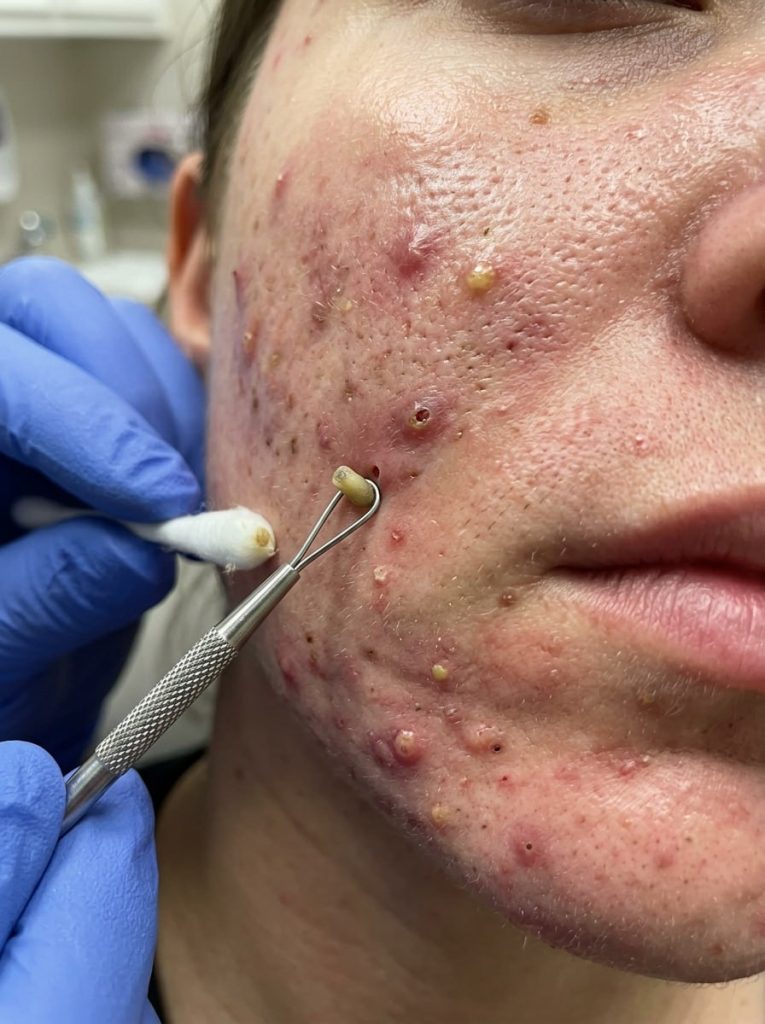
Picking, squeezing, or popping pimples can significantly increase the risk of acne scarring because it adds mechanical injury to skin that is already inflamed. This can make the inflammation deeper, prolong healing, and increase damage to the skin’s supporting structures.
Here are the main reasons:
It pushes inflammation deeper
When pressure is applied to a pimple, its contents—including oil, dead skin cells, bacteria, and inflammatory material—can be forced deeper into the dermis instead of being released through the skin surface. This can spread inflammation into surrounding tissue and enlarge the area of damage.
It increases tissue injury
Picking tears the skin and damages healthy tissue in addition to the original acne lesion. This extra injury can destroy more collagen and elastin fibers, making it more difficult for the skin to heal with a smooth surface.
It prolongs the healing process
Repeated manipulation interrupts normal wound healing. Instead of progressing steadily through inflammation, repair, and collagen remodeling, the wound may repeatedly return to an inflammatory state, increasing the likelihood of abnormal healing.
It raises the chance of infection
Fingers and fingernails can introduce additional bacteria into the damaged skin. Although acne itself is not caused simply by “dirty hands,” introducing new microbes into an open lesion can worsen inflammation or lead to a secondary skin infection.
It disrupts collagen remodeling
Healing depends on a careful balance between collagen breakdown and new collagen production. Repeated picking can interfere with this balance, increasing the chance that the skin heals with:
- Too little collagen, leading to depressed (atrophic) scars such as ice pick scars, boxcar scars, or rolling scars.
- Too much collagen, resulting in raised scars such as hypertrophic scars or, in susceptible individuals, keloids.
It can leave persistent discoloration
Even if a permanent scar does not form, picking commonly increases the risk of:
- Post-inflammatory hyperpigmentation, which appears as brown or dark marks.
- Post-inflammatory erythema, which appears as lingering red or pink marks.
These changes often fade over time but can persist for months.
How to reduce scarring risk
If you have an inflamed pimple, it’s generally better to:
- Avoid squeezing or picking it.
- Use evidence-based acne treatments to reduce inflammation early.
- Consider seeing a dermatologist if you develop frequent deep nodules or cysts, since prompt treatment can lower the risk of permanent scars.
- If a pimple is very large or painful, a dermatologist may be able to safely drain it or treat it with an anti-inflammatory injection in selected cases, reducing inflammation while minimizing additional tissue injury.
In short, the more tissue damage and prolonged inflammation that occur during healing, the greater the chance that collagen repair will be imperfect and a visible acne scar will remain.
